
Most small businesses enable Google Ads automated bidding without realizing it only works when conversion tracking is accurate. This article explains the core benefit of automated bidding, why it fails when setup is wrong, and the exact three-step fix to get profitable results.
You're spending money on Google Ads, but you're not sure if the tracking is actually working. Your conversion numbers look good in Google Ads, but they don't match what you're seeing in your CRM or bank account. Or worse — you set up automated bidding and watched your cost-per-conversion climb without understanding why.
This isn't a character flaw. Automated bidding is genuinely confusing for small business owners because Google's interface treats it like a solved problem, when really it's a tool that only works if a specific foundation is in place first.
The core benefit of Google Ads automated bidding is simple: it adjusts your bids in real time based on the likelihood that a click will convert. No more manual bid adjustments. No more guessing. In theory, you should spend less per conversion and get more revenue per dollar. In practice, most small businesses turn it on and lose visibility into what's actually happening.
This article breaks down what automated bidding really does, why it fails without proper setup, and how to use it correctly.
Why This Problem Is More Common Than You Think
Automated bidding is easy to enable and hard to understand. Google gives you five main options: Target CPA (cost-per-acquisition), Target ROAS (return on ad spend), Maximize Conversions, Maximize Conversion Value, and Enhanced CPC. Each one sounds like it solves a different problem, so business owners pick one and assume the algorithm will handle the rest.
What most people don't realize: automated bidding only works if Google has reliable conversion data to learn from. If your conversion tracking is broken, incomplete, or measuring the wrong thing, automated bidding doesn't get smarter — it just gets more confidently wrong.
Here's where the confusion starts. You see 50 conversions in Google Ads last month, so you enable Target CPA and set it to $30. Google starts optimizing toward that target. But then you check your actual revenue, and the numbers don't line up. Either you had fewer real conversions than Google counted, or you had more — and now Google is bidding based on incomplete information.
Small businesses often have multiple conversion sources: phone calls, form submissions, email inquiries, and actual purchases. Setting up conversion tracking to capture all of them is tedious. It's tempting to just track the easy one (like form submissions) and call it done. But then automated bidding only learns from partial data, and your cost-per-acquisition gets worse, not better.
The Real Cost of Ignoring It
If your conversion tracking isn't accurate, automated bidding will either overspend or underspend. Neither is good.
Overspending happens when Google thinks conversions are more common than they actually are. Let's say you're a contractor taking calls and web form submissions. You set up conversion tracking for form submissions only — maybe 20 per month. You enable Target CPA at $40. Google gets excited and increases your bids to hit that target, because it thinks you're converting at a better rate than you actually are. Your real cost per qualified lead (including phone calls) climbs to $60 or $70, but Google still thinks it's optimized. You don't notice until month-end, and by then you've wasted budget on overly aggressive bidding.
Underspending happens the opposite way. You're tracking conversions, but your tracking includes invalid clicks or accidental submissions. Google thinks conversions are cheaper than they are, so it cuts your bids and volume drops. You don't get enough visibility to reach your actual best customers.
Beyond the immediate budget hit, misaligned tracking breaks your ability to make decisions. You can't compare the performance of different campaigns. You can't test new strategies confidently. And you lose trust in your data — which means you stop using automated bidding features that could actually help, and you switch back to manual bidding, which takes more time and often performs worse.
For a small business spending $1,500–$5,000 per month on Google Ads, a month of misaligned automated bidding can waste 10–20% of that budget. That's real money that could have gone into hiring, inventory, or better campaigns.
The Better Approach
Automated bidding is worth using — but only after you've done three things first.
1. Fix Your Conversion Tracking
Before you enable any automated bidding strategy, you need a single source of truth for what counts as a conversion. This means:
- Define what "conversion" actually means for your business. Is it a purchase? A qualified lead? A phone call? A scheduled appointment? A form submission that closes 30% of the time? Be specific.
- Track every conversion point. If you're a med spa, track online booking confirmations AND phone calls. If you're a contractor, track form submissions AND phone inquiries. Use Google's conversion tracking code, call extensions with call tracking, and form auto-submission tracking.
- Validate your tracking against your actual business metrics. At the end of the month, Google Ads should report roughly the same number of conversions as your CRM, your phone system, or your payment processor. If they don't match, your tracking is wrong.
This is unglamorous work, but it's non-negotiable. If you're uncertain about your setup, ask for a $200 PPC audit — a good audit will tell you exactly what's broken.
2. Choose the Right Automated Bidding Strategy for Your Goal
Once your tracking is solid, pick a strategy aligned with what you actually want to optimize for:
- Target CPA: Best if you know your average customer value and want consistent cost-per-lead. Works for restaurants chasing reservations, cleaning companies chasing service calls, or contractors chasing qualified inquiries.
- Target ROAS: Best if you're tracking actual revenue. Works for ecommerce or service businesses that can tie conversions back to dollar amounts.
- Maximize Conversions: Best if you're trying to get as many leads as possible within a set budget, without caring about individual cost. Use this if you have a large sales team that can close high volumes.
Don't pick a strategy because it sounds advanced. Pick it because it matches your business model.
3. Give It Time to Learn
Automated bidding needs data. Google recommends at least 30 conversions per month before enabling Target CPA or Target ROAS. If you're below that, you're better off with manual bidding or a simpler automated strategy. If you do have sufficient volume, be patient. The algorithm needs 2–3 weeks to stabilize and optimize properly.
How to Get Started
Start with one campaign. Here's the sequence:
- Audit your conversion tracking. Use Google Analytics 4 and your CRM to verify that Google Ads conversion counts match reality. Write down any discrepancies.
- Fix tracking gaps. Add missing conversion points (phone calls, form submissions, offline conversions) using Google's tools.
- Enable automated bidding on the campaign with the most conversion volume. Start with Target CPA if you know your average lead value. Set the target slightly higher than your current manual CPA to give Google room to optimize.
- Monitor weekly. Check your cost-per-conversion and total conversion count. If either one drifts significantly, pause the automated strategy and diagnose the issue before trying again.
- Scale cautiously. Once one campaign is stable and profitable, apply the same settings to your next campaign. Don't flip on automated bidding across all campaigns at once.
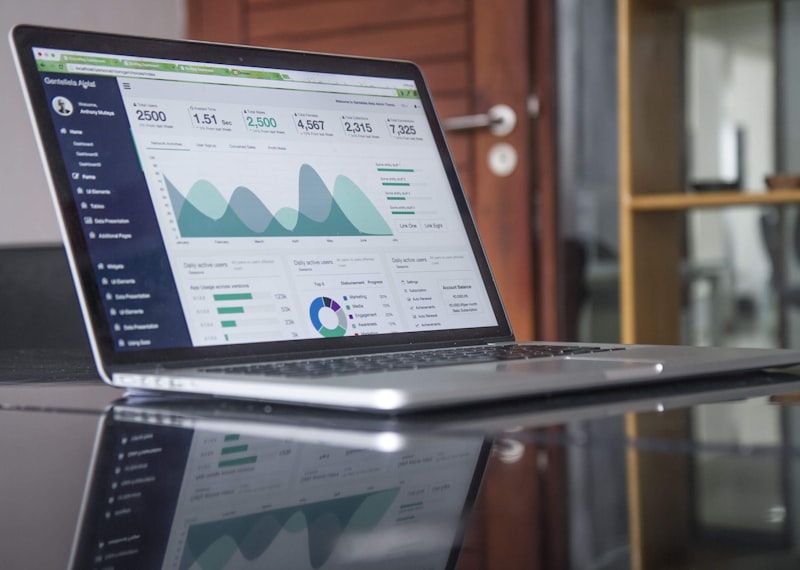
If you want to see what good reporting looks like, you can see the reporting from our sample Google Ads dashboard — it shows which campaigns are profitable and which are draining budget.
Most of our clients who implement proper tracking and automated bidding correctly see cost-per-conversion drop 15–25% within the first month, with fewer manual bid adjustments required. But the win doesn't happen until tracking is right.
What to Do Next
Your immediate action: pull your last 30 days of Google Ads data and compare the conversion count to what actually happened in your business. Call it a sanity check.
If the numbers match, you can confidently enable automated bidding. If they don't, you've just identified why your ad spend isn't performing as expected.
If you're managing campaigns yourself and aren't confident about the setup, consider getting a second opinion. We offer Google Ads management starting at $500/month flat (never a percentage of spend), and we always start by making sure tracking is bulletproof before touching bids.
The core benefit of automated bidding isn't magic. It's just faster, smarter bid adjustments — but only when your data is trustworthy. Get that right first, and the rest works.
Tags: google ads, automated bidding, ppc, conversion tracking, small business advertising
Want to know which of these is actually costing you money?
Answer nine questions and we will tell you where we would look first — free, with the reasoning shown. Or explore our Google Ads management.